Skip to content

Cart

Your cart is empty

Continue shopping
A Simple, Nurturing Blend

Inside the Formula

We believe the best formulas start with thoughtful ingredients. That’s why NurtureBio combines gentle probiotics and breast milk-inspired HMOs to help support your baby’s growing gut and developing immune system in a simple, nurturing way.

Inside the Formula

Why We Chose This Blend

Your baby’s tummy is still learning and changing, so we created a formula that feels supportive from the start. Every ingredient was chosen to help nourish the good bacteria in the gut, support digestive comfort, and offer gentle immune support along the way.

Inside the Formula

Gentle Probiotics

Our probiotic blend includes infant-friendly strains that are commonly found in the guts of breastfed babies. These helpful bacteria were chosen to support a healthy gut environment and everyday digestive balance.

Inside the Formula

HMOs That Help Feed the Good Bacteria

We also include a blend of HMOs, which are special carbohydrates naturally found in breast milk. Their role is to help feed beneficial bacteria in the gut, creating a more nurturing environment for healthy development.

Inside the Formula

Better Together

The probiotics and HMOs in NurtureBio work side by side. The probiotics bring in the good bacteria, and the HMOs help them thrive. Together, they create a formula designed to support your baby’s gut in a gentle, thoughtful way.

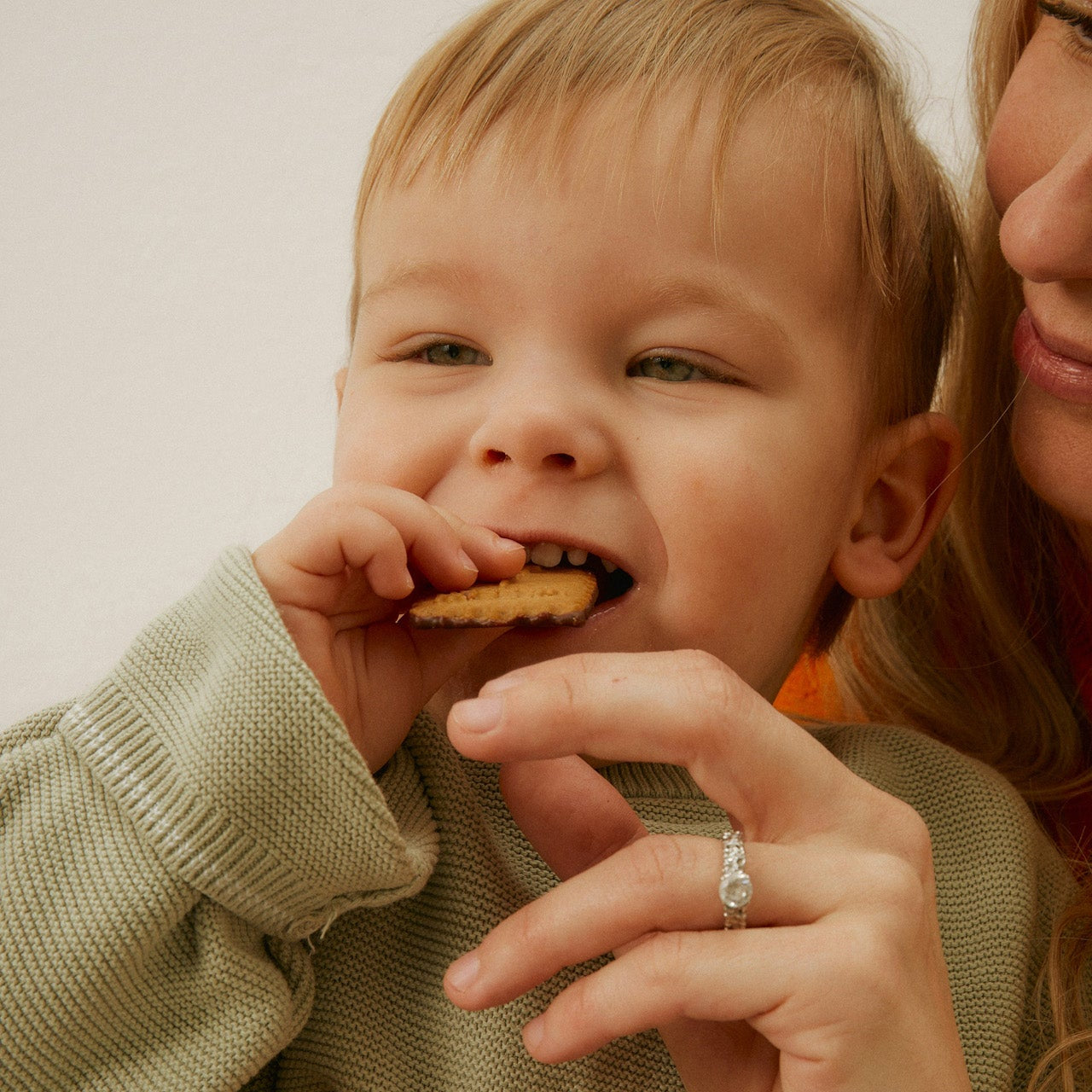
Child eating a cookie with a woman holding them, both wearing green sweaters.Child eating a cookie with a woman holding them, both wearing green sweaters.
The Future of Baby Health

Made with Care for Growing Families

We know parents want ingredients they can feel good about. NurtureBio was created to offer simple, meaningful support with a formula that’s easy to trust and gentle enough for little ones.

Shop Now
The Formulation

Why this formulation, and what it does

Every ingredient in NurtureBio was chosen for a specific reason, with research to back it. The four probiotic strains and five human milk oligosaccharides work together because of how they were designed to interact: the strains feed on the oligosaccharides, and the oligosaccharides reach the lower gut where the beneficial bacteria live. Below is what each part of the formulation is designed to support, and the published science behind those choices.

Breastfeeding mother and baby
01 The Microbiome

Building a breastfed-like gut environment

The infant gut microbiome looks different from an adult's, and it should. Breastfed babies develop a gut rich in Bifidobacterium, particularly B. infantis and B. bifidum, which thrive on the prebiotic sugars in breast milk. NurtureBio pairs these same species with five of the most abundant human milk oligosaccharides found in mature breast milk.

In a clinical study of 221 healthy infants, B. infantis Rosell-33 and B. bifidum Rosell-71 were shown to support an infant-specific gut microbiome rich in Bifidobacteria (Manzano et al., 2017; De Andrés et al., 2018). When B. infantis is given to breastfed infants in the first month of life, colonization can persist for at least a year (O'Brien et al., 2022).

Mother holding crying baby
02 Digestive Comfort

Supporting digestive comfort

Gas, fussiness, irregular stools, and the general unpredictability of infant digestion are among the most common reasons parents look for support. The four probiotic strains in NurtureBio have been studied for their roles in balanced digestion and stool consistency.

Limosilactobacillus reuteri in particular has a substantial research base in infant digestive comfort, with reviews of the species reporting positive effects on colic, constipation, and regurgitation (Alam et al., 2022; Kumar & Kumari, 2024). The 2'-Fucosyllactose and Lacto-N-tetraose included in our HMO blend have been linked to improved gastrointestinal tolerance and stool patterns that more closely resemble those of breastfed infants (Lasekan et al., 2022; Alliet et al., 2022).

mother holding a crying baby
03 Immune Development

Supporting the developing immune system

Roughly 70% of the immune system lives in the gut. The microbes that colonize your baby's gut in the first months and years are part of how the immune system learns what to tolerate and what to respond to.

B. infantis Rosell-33 has been clinically shown to support a more balanced anti-inflammatory profile in infants, measured by IL-10 to IL-12 ratios (De Andrés et al., 2018). A 2025 systematic review and meta-analysis of infant-type Bifidobacteria in healthy term infants found that early administration of these strains was associated with a meaningful reduction in eczema (Sjælland et al., 2025). HMO-supplemented infants have also been shown to have lower rates of parent-reported respiratory and gastrointestinal infections, with inflammatory markers closer to those of breastfed babies (Puccio et al., 2017).

Designed Pairings · Strain × HMO
B. infantis Rosell-33
2'-FL 2'-Fucosyllactose
B. bifidum Rosell-71
2'-FL + 3'-SL Fuc + Sialylated
B. bifidum HA-132
2'-FL or 3'-SL Purine pathway
L. reuteri
LNT + 6'-SL Co-supportive
4 Strains 5 HMOs 1 Synbiotic
04 The Synbiotic Design

A blend that works together, not just individually

Probiotics and HMOs are each beneficial on their own. They work better together. B. infantis Rosell-33 preferentially metabolizes fucosylated HMOs like 2'-FL, producing lactic and acetic acid that protect against opportunistic microorganisms and feed other beneficial bacteria.

B. bifidum Rosell-71 paired with 2'-FL and 3'-SL has been shown to enhance production of short-chain fatty acids, essential amino acids, and neurotransmitters relevant to gut barrier function and neural development. B. bifidum HA-132 combined with 2'-FL or 3'-SL increases production of purines that support tissue regeneration and cellular energy metabolism. These are the pairings we built the formulation around.

05 Every Feeding Journey

Designed for every feeding journey

NurtureBio was formulated to work whether your baby is exclusively breastfed, formula-fed, or somewhere in between. The species included are naturally found in the breastfed infant gut. The HMOs are among those naturally present in mature breast milk.

For families using formula or combination feeding, NurtureBio adds back some of what is harder to replicate. For breastfeeding families, it provides consistent levels of specific strains and HMOs alongside what your milk is already providing. The full blend has been clinically tested in healthy infants under three months of age, with peer-reviewed safety data published in Beneficial Microbes (Manzano et al., 2017).

NurtureBio single-serve sachet
06 The Carrier

A clean carrier made for tiny systems

Maltodextrin is the only carrier in NurtureBio. There are no added sweeteners, no artificial flavors, no colors, no preservatives, and none of the Big 9 allergens. Each strain has been screened against three antibiotic resistance gene databases and confirmed to carry no transferable resistance genes. All four strains appear on the EFSA Qualified Presumption of Safety list and Health Canada's probiotics monograph. The single-sachet format mixes easily into breast milk, formula, or water without changing taste or texture.

No Big 9
Allergens
Third-Party
Tested
cGMP
Manufactured
EFSA
Listed Strains
The Research Library

Built on published science

NurtureBio's formulation decisions were informed by peer-reviewed research on the infant microbiome, probiotic strain selection, and human milk oligosaccharides. Below is a curated library of the papers underlying our ingredient choices, organized by topic. Many are open-access; institutional access may be required for others.

01 Safety, tolerability, and clinical evidence for the NurtureBio strains
  1. Manzano S, De Andrés J, Castro I, Rodríguez JM, Jiménez E, Espinosa-Martos I. Safety and tolerance of three probiotic strains in healthy infants: a multi-centre randomized, double-blind, placebo-controlled trial. Beneficial Microbes. 2017;8(4):569-578. DOI

  2. De Andrés J, Manzano S, García C, Rodríguez JM, Espinosa-Martos I, Jiménez E. Modulatory effect of three probiotic strains on infants' gut microbial composition and immunological parameters on a placebo-controlled, double-blind, randomised study. Beneficial Microbes. 2018;9(4):573-584. DOI

  3. Tremblay A, Xu X, Colee J, Tompkins TA. Efficacy of a Multi-Strain Probiotic Formulation in Pediatric Populations: A Comprehensive Review of Clinical Studies. Nutrients. 2021;13(6):1908. DOI

  4. Binda S, Chow-Shi-Yée M, El Salti S, et al. The Effect of Probiotics on Health in Pregnancy and Infants: A Randomized, Double-Blind, Placebo-Controlled Trial. Nutrients. 2025;17(11):1825. DOI

  5. Sjælland MA, Philipsen MT, Henriksen TB, Skipper J, Rubak S. Probiotics in Term Infants: Clinical Impact of Infant-Type Bifidobacteria: A Systematic Review and Meta-analyses. The Journal of Nutrition. 2025;155(12):4075-4086. DOI

02 Bifidobacterium infantis, B. bifidum, and the infant gut
  1. O'Brien CE, Meier AK, Cernioglo K, et al. Early probiotic supplementation with B. infantis in breastfed infants leads to persistent colonization at 1 year. Pediatric Research. 2022;91(3):627-636. - DOI

  2. Shao Y, Garcia-Mauriño C, Clare S, et al. Primary succession of Bifidobacteria drives pathogen resistance in neonatal microbiota assembly. Nature Microbiology. 2024;9(10):2570-2582. DOI

  3. Newburg DS, Morelli L. Human milk and infant intestinal mucosal glycans guide succession of the neonatal intestinal microbiota. Pediatric Research. 2015;77(1-2):115-120. DOI

  4. Walsh C, Owens RA, Bottacini F, Lane JA, van Sinderen D, Hickey RM. HMO-primed bifidobacteria exhibit enhanced ability to adhere to intestinal epithelial cells. Frontiers in Microbiology. 2023;14:1232173. - DOI

  5. Olm MR, Dahan D, Carter MM, et al. Robust variation in infant gut microbiome assembly across a spectrum of lifestyles. Science. 2022;376(6598):1220-1223. DOI

03 Limosilactobacillus reuteri in infant digestive comfort
  1. Alam MJ, Islam MMZ, Tayab MA, Kamrul Alam HS, Kamrul MK, Mahmood S, Haque AA. Role of Probiotic Lactobacillus reuteri in Improving Gut Health and Immunity in Infants and Toddlers: A Review. International Journal of Nutrition Sciences. 2022;7(2):75-80. DOI

  2. Sung V, D'Amico F, Cabana MD, et al. Lactobacillus reuteri to Treat Infant Colic: A Meta-analysis. Pediatrics. 2018;141(1):e20171811. DOI

  3. Peng Y, Ma Y, Luo Z, Jiang Y, Xu Z, Yu R. Lactobacillus reuteri in digestive system diseases: focus on clinical trials and mechanisms. Frontiers in Cellular and Infection Microbiology. 2023;13:1254198. DOI

  4. Urbańska M, Szajewska H. The efficacy of Lactobacillus reuteri DSM 17938 in infants and children: a review of the current evidence. European Journal of Pediatrics. 2014;173(10):1327-1337. DOI

04 Human Milk Oligosaccharides: structure, function, and clinical evidence
  1. Lasekan J, Choe Y, Dvoretskiy S, et al. Growth and Gastrointestinal Tolerance in Healthy Term Infants Fed Milk-Based Infant Formula Supplemented with Five Human Milk Oligosaccharides (HMOs): A Randomized Multicenter Trial. Nutrients. 2022;14(13):2625. DOI

  2. Alliet P, Vandenplas Y, Roggero P, et al. Safety and efficacy of a probiotic-containing infant formula supplemented with 2'-fucosyllactose: a double-blind randomized controlled trial. Nutrition Journal. 2022;21(1):11. DOI

  3. Puccio G, Alliet P, Cajozzo C, et al. Effects of Infant Formula With Human Milk Oligosaccharides on Growth and Morbidity: A Randomized Multicenter Trial. Journal of Pediatric Gastroenterology and Nutrition. 2017;64(4):624-631. DOI

  4. Natividad JM, Marsaux B, Rodenas CLG, et al. Human Milk Oligosaccharides and Lactose Differentially Affect Infant Gut Microbiota and Intestinal Barrier In Vitro. Nutrients. 2022;14(12):2546. DOI

  5. Hu M, Miao M, Li K, Luan Q, Sun G, Zhang T. Human milk oligosaccharide lacto-N-tetraose: Physiological functions and synthesis methods. Carbohydrate Polymers. 2023;316:121067. DOI

  6. Zhu Y, Zhang J, Zhang W, Mu W. Recent progress on health effects and biosynthesis of two key sialylated human milk oligosaccharides, 3'-sialyllactose and 6'-sialyllactose. Biotechnology Advances. 2023;62:108058. DOI

  7. Laursen MF, Roager HM. Human milk oligosaccharides modify the strength of priority effects in the Bifidobacterium community assembly during infancy. The ISME Journal. 2023;17(12):2452-2457. DOI

  8. Bosheva M, Tokodi I, Krasnow A, et al. Infant Formula With a Specific Blend of Five Human Milk Oligosaccharides Drives the Gut Microbiota Development and Improves Gut Maturation Markers: A Randomized Controlled Trial. Frontiers in Nutrition. 2022;9:920362. DOI

05 The breast milk microbiome, the first 1,000 days, and infant development
  1. Notarbartolo V, Giuffrè M, Montante C, Corsello G, Carta M. Composition of Human Breast Milk Microbiota and Its Role in Children's Health. Pediatric Gastroenterology, Hepatology & Nutrition. 2022;25(3):194-210. DOI

  2. Biagi E, Quercia S, Aceti A, et al. The Bacterial Ecosystem of Mother's Milk and Infant's Mouth and Gut. Frontiers in Microbiology. 2017;8:1214. DOI

  3. Pérez-Escamilla R, Tomori C, Hernández-Cordero S, et al. Breastfeeding: crucially important, but increasingly challenged in a market-driven world. The Lancet. 2023;401(10375):472-485. DOI

  4. Laue HE, Coker MO, Madan JC. The Developing Microbiome From Birth to 3 Years: The Gut-Brain Axis and Neurodevelopmental Outcomes. Frontiers in Pediatrics. 2022;10:815885. DOI

  5. Delaroque C, Chassaing B. Microbiome in heritage: how maternal microbiome transmission impacts next generation health. Microbiome. 2025;13:196. Microbiome DOI

  6. Zhang L, Agrawal M, Ng SC, Jess T. Early life exposures and the microbiome: implications for inflammatory bowel disease prevention. Gut. 2024;73(3):541-549. DOI

  7. Nolan LS, Rimer JM, Good M. The Role of Human Milk Oligosaccharides and Probiotics on the Neonatal Microbiome and Risk of Necrotizing Enterocolitis: A Narrative Review. Nutrients. 2020;12(10):3052. DOI

This library is not exhaustive. The science of the infant microbiome is moving quickly, and we update this page as new peer-reviewed evidence emerges. Members of our Scientific Advisory Board can speak to their respective areas of expertise in greater depth.

We're here to help

Frequently asked questions

What are HMOs, and which ones does NurtureBio use?

Human milk oligosaccharides (HMOs) are complex carbohydrates naturally found in breast milk, where they are the third most abundant solid component after fat and lactose. Babies do not digest HMOs directly. Instead, the HMOs travel to the lower gut where they feed beneficial bacteria like Bifidobacterium. NurtureBio uses five HMOs: 2'-FL, DFL, LNT, 3'-SL, and 6'-SL. Many infant products that include HMOs use only one, typically 2'-FL. NurtureBio uses five to support a wider range of beneficial bacteria, since different HMOs feed different microbes.

What probiotic strains are in NurtureBio, and why these specific ones?

NurtureBio contains four probiotic strains selected for their clinical research in infants: Bifidobacterium infantis Rosell-33, two strains of Bifidobacterium bifidum (Rosell-71 and HA-132), and Limosilactobacillus reuteri Rosell-444. These strains are commonly found in the gut microbiomes of breastfed babies and have been studied for their roles in supporting digestion, gut barrier function, and immune development. Research suggests that multi-strain blends can offer broader coverage than single-strain formulas, since different strains contribute different functions to the gut environment.

What ingredients are in NurtureBio?

Each NurtureBio sachet contains four probiotic strains and five human milk oligosaccharides (HMOs). The probiotic strains are Bifidobacterium infantis Rosell-33, Bifidobacterium bifidum Rosell-71, Bifidobacterium bifidum HA-132, and Limosilactobacillus reuteri Rosell-444. The five HMOs are 2'-FL, DFL, LNT, 3'-SL, and 6'-SL. A small amount of maltodextrin is included to protect the live probiotics, and the formula contains no added sweeteners, no artificial colors, and no artificial flavors.

How many CFUs are in each sachet?

Each NurtureBio sachet delivers 3 billion CFUs (colony-forming units) of live probiotic bacteria. This dosage was selected based on clinical studies showing it to be both safe and well tolerated in infants. Higher CFU counts are not necessarily better for babies, since the research on infant gut health emphasizes strain selection and the pairing of probiotics with HMOs more than raw CFU counts.

Does NurtureBio contain B. infantis?

Yes, NurtureBio contains Bifidobacterium infantis Rosell-33 as one of its four probiotic strains. B. infantis is one of the most well-studied strains in infant gut health research and is known for its ability to metabolize HMOs. In a clinical study of 221 healthy infants, B. infantis Rosell-33 was shown to support an infant-specific gut microbiome rich in Bifidobacteria.

Why does NurtureBio pair probiotics with HMOs instead of using probiotics alone?

NurtureBio is formulated as a synbiotic, which means it pairs probiotics with the prebiotics that feed them. The five HMOs are the prebiotic component. This reflects how breast milk works, since breast milk delivers both beneficial bacteria and the HMOs that nourish them. Pairing the two gives the probiotic strains a food source from the start, which research suggests can improve their ability to establish in the infant gut. Preclinical research on the strains in NurtureBio has shown that they metabolize specific HMOs in the blend, producing compounds associated with a healthy gut environment.d concise answer to guide your customers.

Is NurtureBio clinically studied?

NurtureBio is currently conducting clinical research in partnership with the University of Cincinnati College of Medicine to study its specific formulation. Beyond that in-progress work, the individual ingredients in NurtureBio are supported by published research. The Bifidobacterium strains have peer-reviewed safety data in healthy infants, including babies under three months, and the five HMOs have been studied individually and in combination in infant nutrition research. As with most supplements, the science exists at different levels for different ingredients, and we are building the evidence base for the finished formulation through our own research. The formulation was developed with guidance from our Scientific Advisory Board, a group of leading researchers in the infant microbiome and human milk science.

Who developed NurtureBio's formulation?

NurtureBio's formulation was developed in partnership with Lallemand Health Solutions, a global leader in probiotic research and manufacturing with more than 100 years of expertise in microbial science. The formulation was guided by NurtureBio's Scientific Advisory Board, which includes leading researchers in the infant microbiome, human milk oligosaccharides, and pediatric nutrition.

How is NurtureBio manufactured and tested?

NurtureBio is manufactured in a facility that follows current Good Manufacturing Practices (cGMP), and the probiotic strains are produced by Lallemand Health Solutions. Every batch undergoes purity and potency testing, which includes screening for contaminants and confirming that the live probiotic count meets the label claim through the end of shelf life..